The importance of error messages
As with anything in life, there’s always something that can go wrong; the most important thing is how we handle it. In our increasingly complex digital world, the same applies to software.
The good, the bad, and the ugly
In the context of software applications, even though we try our best to avoid errors, they can still happen. It’s essential to handle them gracefully and provide useful information to the user. Our approach to this problem can be a crucial factor in the success of our application.
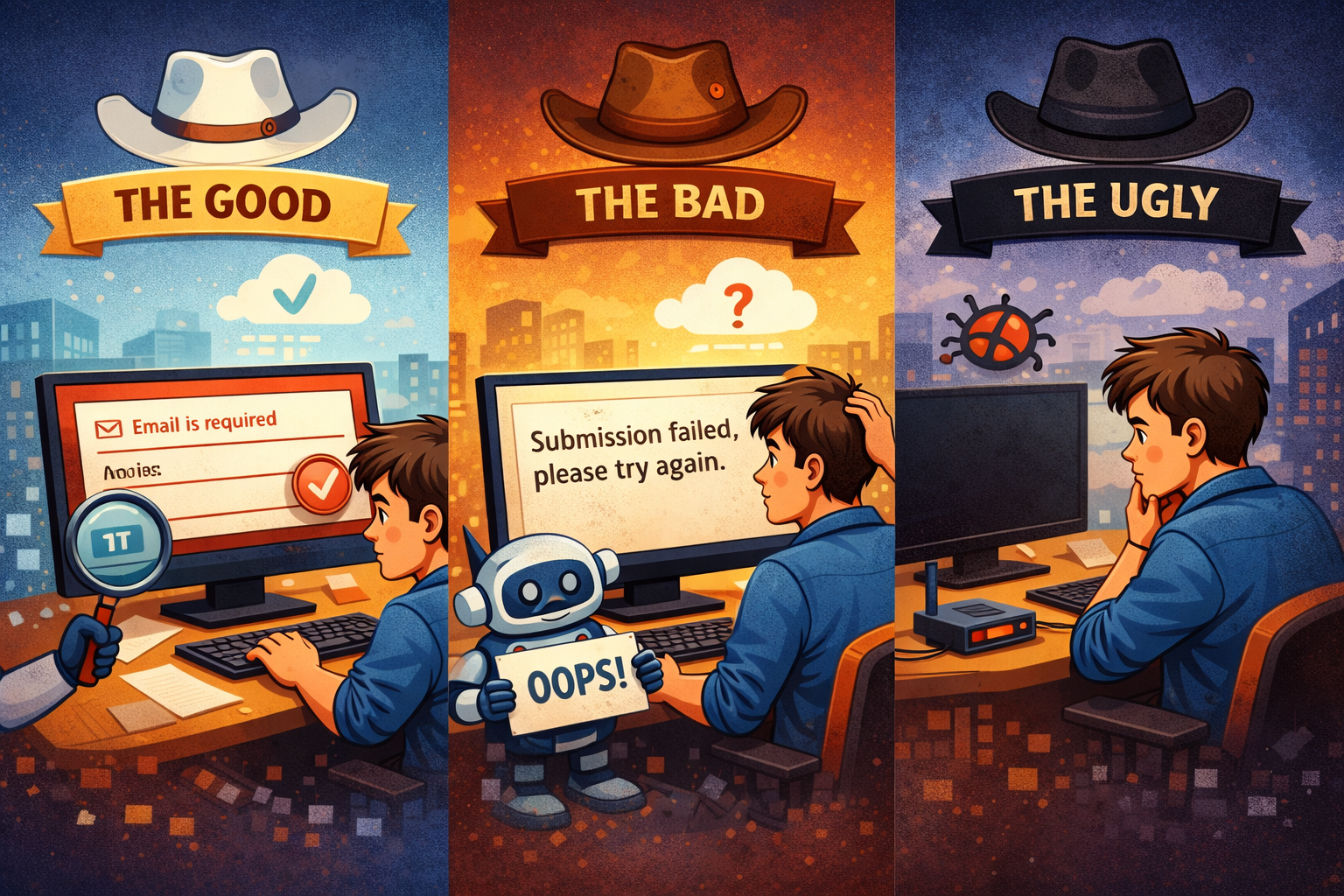
When failure happens, it’s always important to provide clear feedback to the user. Maybe they failed to notice a required form input during submission. In this scenario, the best approach would be to highlight the input with missing information to help them understand what they need to do.
Keeping with the previous form scenario, if we instead displayed just a generic error message, such as “Submission failed, please try again”. It would be difficult for them to understand what they did wrong, especially so for the less tech-savvy users. They would probably try a couple more times but eventually give up and leave.
There’s also the case of unexpected errors. These can be due to some part of the system that failed, rather than due to the user’s action. In these cases, more often than not, what happens is that the user is left with only a generic error message, or worse, a blank screen. We’ve all been there. Even in the scenario that the failure is due to something out of our control, such as a loss of network connection, it’s still important for our software to be able to adapt and let the user know why it failed.
Beyond a simple error message
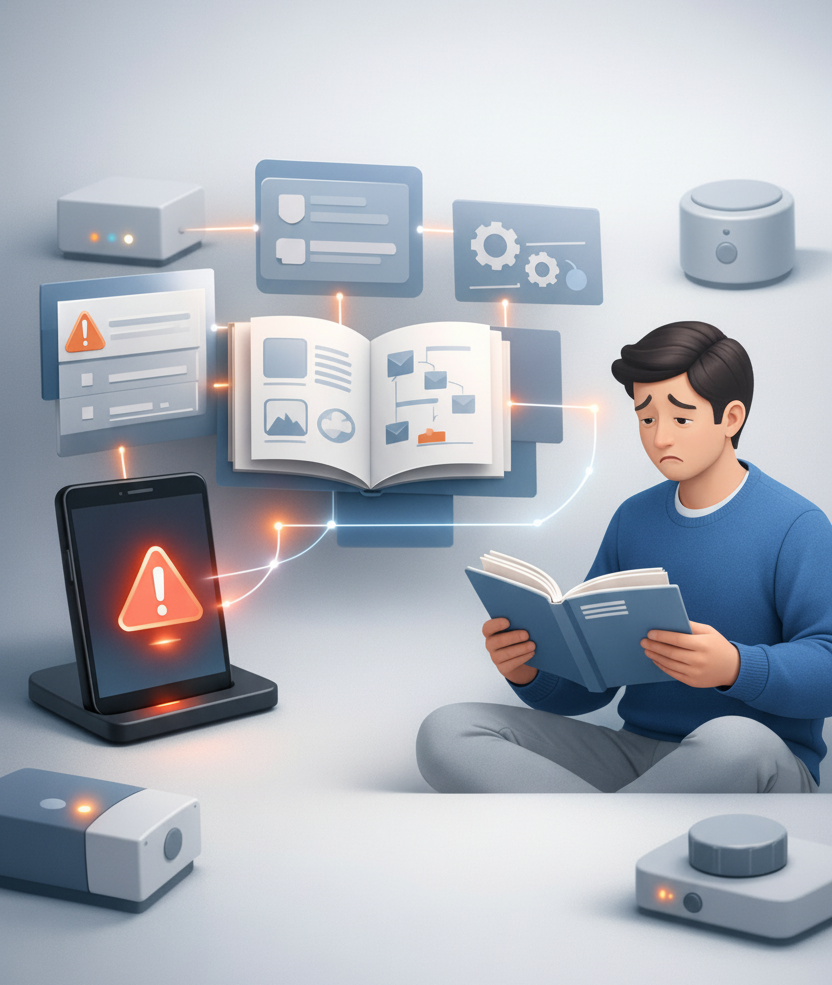
You probably had, at some point in life, some electronic appliance that failed you and started beeping or flashing lights in some unusual way. To help understand what all the noise means, most appliances have a manual or a troubleshooting guide that explains what’s wrong and that can help you resolve the problem or figure out that it’s probably time to call the technician.
In our current era, most software is consumed through small screens, such as our smartphones or tablets. There’s not much room for long and detailed error messages. In these instances, it’s very helpful to provide some sort of code (usually numeric) that the user can look up online to find more information about the error.
This becomes even more important in the context of complex systems, where time spent in figuring out what’s wrong can be costly and even dangerous. A good and accessible manual can be a valuable resource for a team in helping them understand what part of the system is failing and how to take action.
When all fails, log it
Logs are the last line of defense against unexpected errors. They can help the technical team figure out the source of the problem and take the proper action.
Having a good logging system allows you to capture the important events of the application, such as errors, warnings, and other relevant information. This information can then be used to diagnose issues and improve the overall performance of the application.
Nowadays, there are plenty of tools available that can help you manage and analyze logs. Some options even allow you to send alerts to your support team when certain conditions are met. These can allow you to quickly catch and resolve issues before they become critical.
Conclusion
Whether to the end user or the technical team, providing clear and concise information about errors can make a big difference in the success of your project.