Vibe coding governance is quickly becoming a business hot topic.
AI agents generate interfaces from prompts. Prototypes are validated faster. Development cycles shrink. For teams, this directly impacts time-to-market, competitive positioning, and cost efficiency.
But one question keeps emerging inside organizations:
If AI writes the code,
Who ensures it follows your design system?
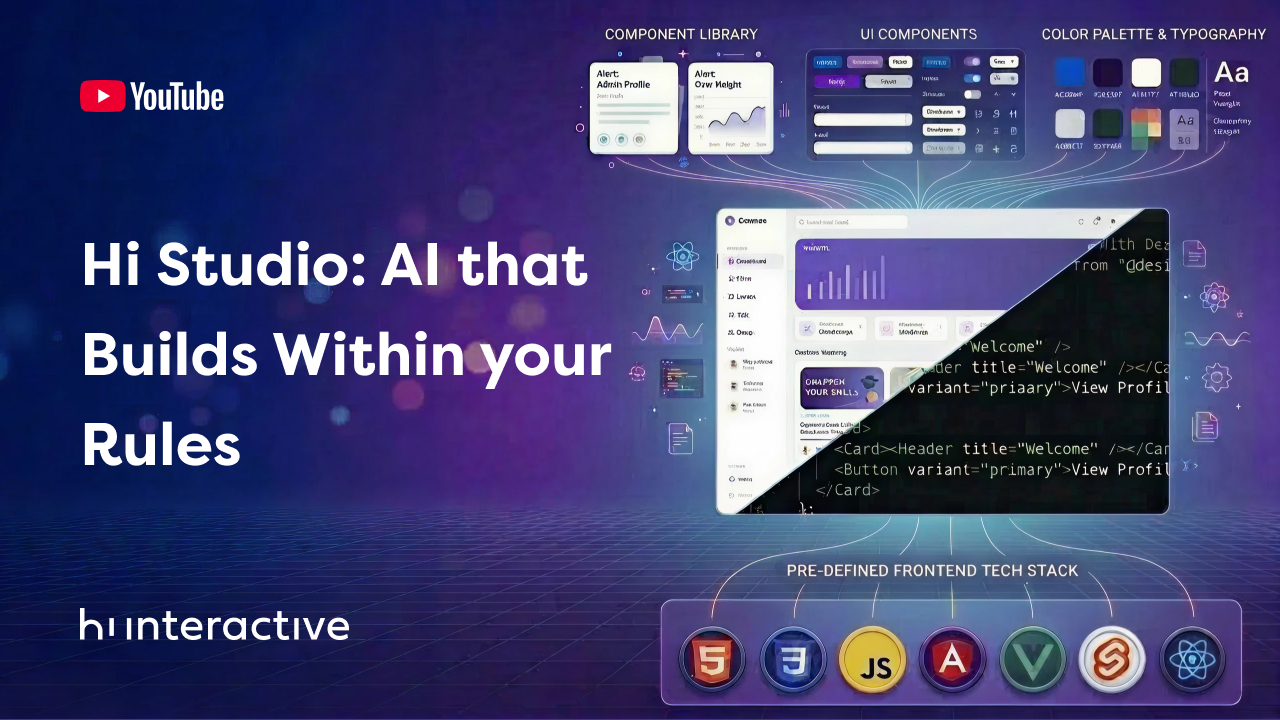
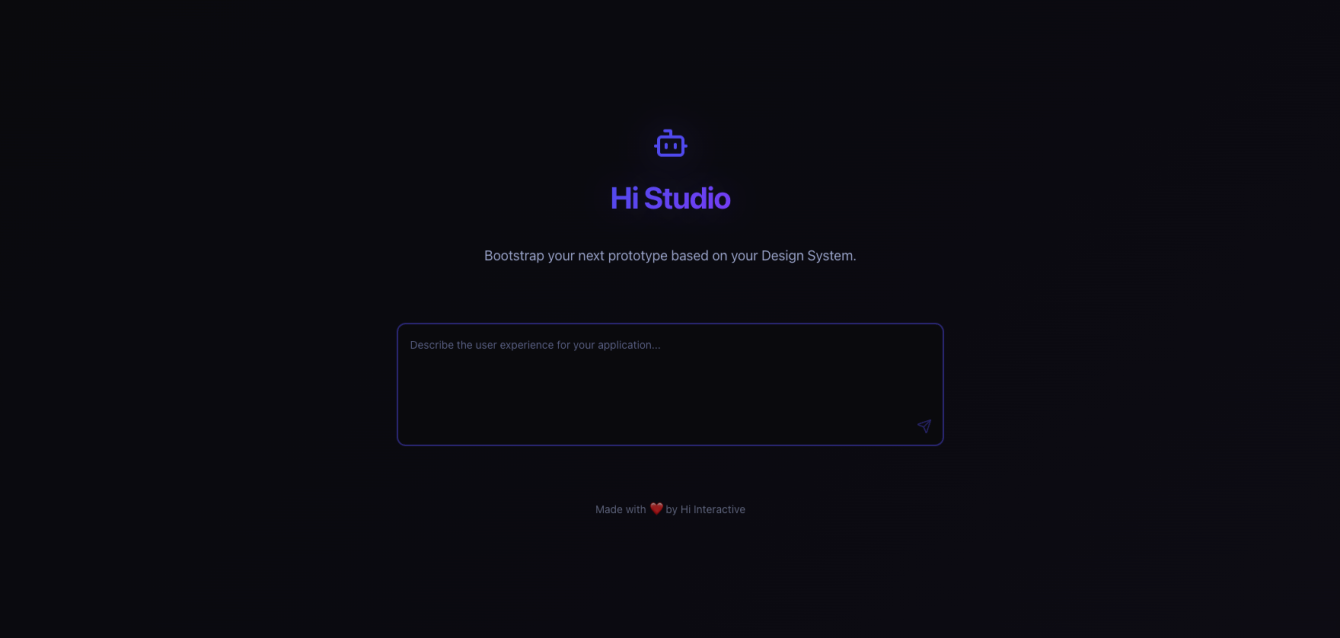
This article explains the economic and technical impact of unmanaged vibe coding, and how the Hi Studio concept turns your design system into the foundation of AI-driven development. The goal is not only speed, but sustainable acceleration, reducing legacy risk while improving delivery performance.
The Hidden Impact of Vibe Coding at Scale
Vibe coding represents a new way of building software: instructing AI to generate functional code through structured prompts
Adoption is growing fast. Most enterprise teams are already experimenting or actively using AI agents
The speed gains are real.
But without alignment to the design system, organizations start noticing friction:
- Not all design system guidelines are followed
- Components are recreated instead of reused
- Accessibility is inconsistently applied
- Code conventions drift
Technically, this increases front-end maintenance effort. Over time, this technical drift increases refactoring cycles and reduces development velocity.
Economically, it reduces the return on your design system investment. It also impacts development costs. More correction cycles, more review layers, and duplicated component work can silently increase delivery effort by 20–30% in large-scale programs.
Because a design system is not just documentation.
It is a centralized architecture meant to ensure consistency, branding alignment, UI standards, and reusable live components
This shift is already shaping how companies think about design systems in the AI era, as explored in our article.
If AI-generated code does not use that architecture, the system loses influence over time. And when architectural influence weakens, legacy grows, making future modernization initiatives slower and more expensive.

Why Vibe Coding Doesn’t Automatically Use Your Design System
By default, vibe coding does not guarantee adherence to your internal rules.
AI generates based on context.
If your design system guidelines, naming conventions, components, and HTML rules are not embedded into the AI agent, they will not be consistently applied
This creates a structural gap:
Your design system defines:
- Branding guidelines
- UI rules
- Live reusable components
But your AI agent may generate outside that controlled architecture.
The result is not chaos.
It is a gradual divergence.
And gradual divergence increases cost over time.
The Shift: Training the AI Agent on Your Design System
The solution is not to slow down vibe coding.
It is to train the AI agent with your design system as its primary data source
This requires:
- A robust live style guide
- Clear UI and accessibility guidelines
- Structured component documentation
- Defined tech stack and code rules
When the AI agent is configured to use this documentation as its foundation:
- Code is generated using real design system components
- Naming conventions are respected
- HTML structure follows your standards
- Accessibility is ensured
- Output is aligned from the first line
This shifts governance from manual review to automated alignment, reducing correction effort and improving predictability in delivery timelines.
This is the core of the Hi Studio concept.

What the Hi Studio Concept Enables
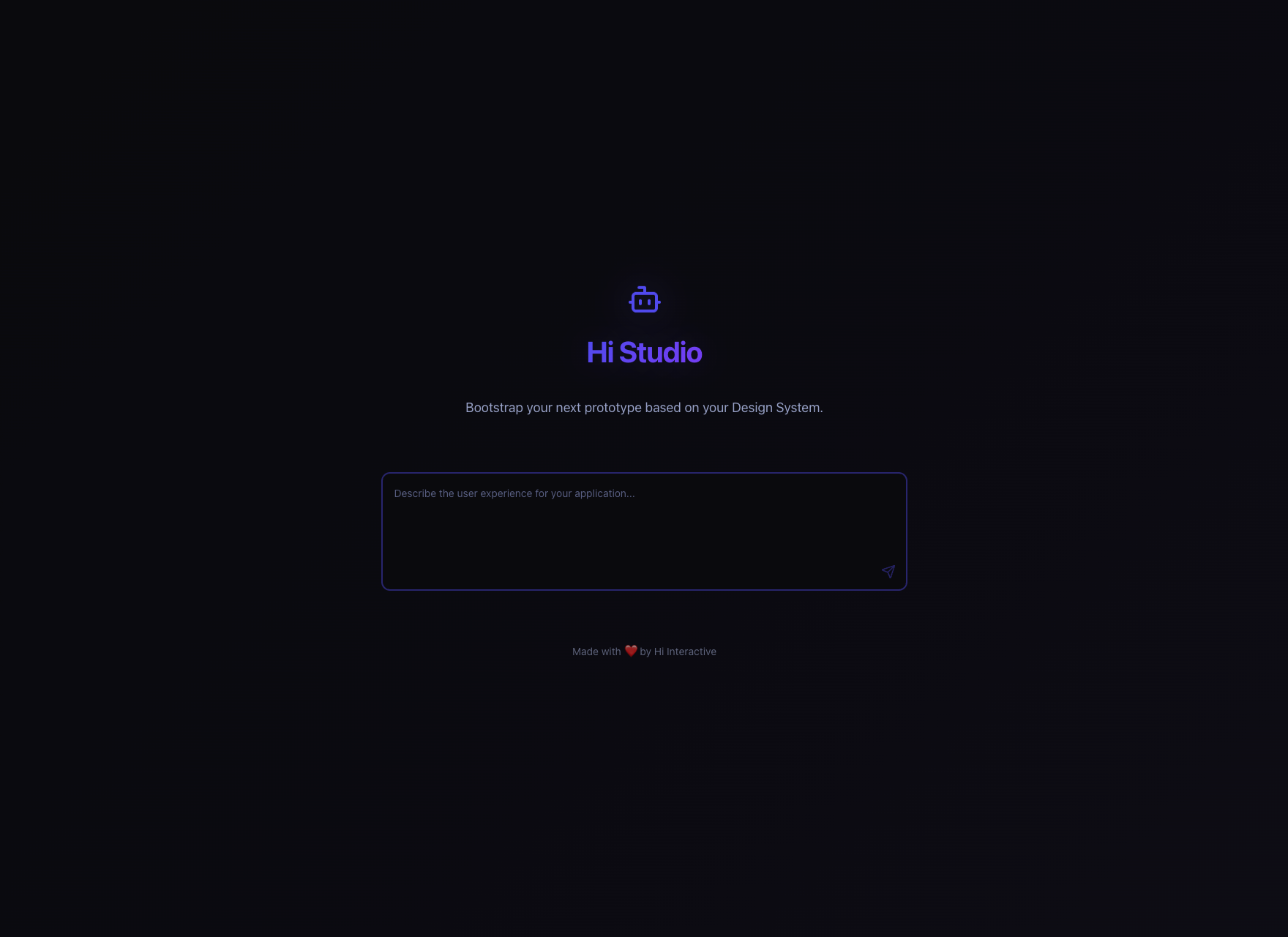
Hi Studio is an AI agent model designed to perform vibe coding using your design system as its architectural base.
It enables:
- Live prototyping directly aligned with your design system
- Code generation fully compliant with guidelines
- Reuse of code from prototype to development
- Reduced UX/UI and front-end effort
- Faster delivery cycles, with the potential to reduce development timelines by up to 50% in structured environments
One of the most strategic advantages lies in consistency.
When design system components evolve, the architecture remains centralized. Updates propagate structurally.
Instead of relying on individual expertise to enforce guidelines, the AI agent applies them automatically
This reduces dependency on scarce UI experts and lowers long-term maintenance costs. It also improves design system adoption rates across production applications, strengthening architectural consistency at scale.
From Acceleration to Sustainable Scale
Traditional development separates prototype and production.
Design validates.
Development rebuilds.
With a design-system-trained AI agent:
- Prototypes are built using real components
- Code can be reused
- Guidelines are already respected
- Development starts one step ahead
This reduces rework. Fewer rebuilds mean lower development cost and improved time-to-market.
It accelerates iteration.
It preserves architectural integrity. And it protects long-term scalability by preventing fragmented legacy from accumulating.
The result is not just faster delivery.
It is structured acceleration.
Vibe Coding Governance as Competitive Advantage
Vibe coding adoption is growing fast.
Organizations that connect it directly to their design system architecture gain leverage. They improve time-to-market while controlling technical debt.
They accelerate without weakening standards.
They prototype live while preserving governance.
They reduce effort without sacrificing consistency.
Hi Studio was created to make that possible. In a market where speed alone is no longer enough, governance becomes the true differentiator.
If AI is already part of your development workflow, the next step is not experimentation.
It is structured integration.